








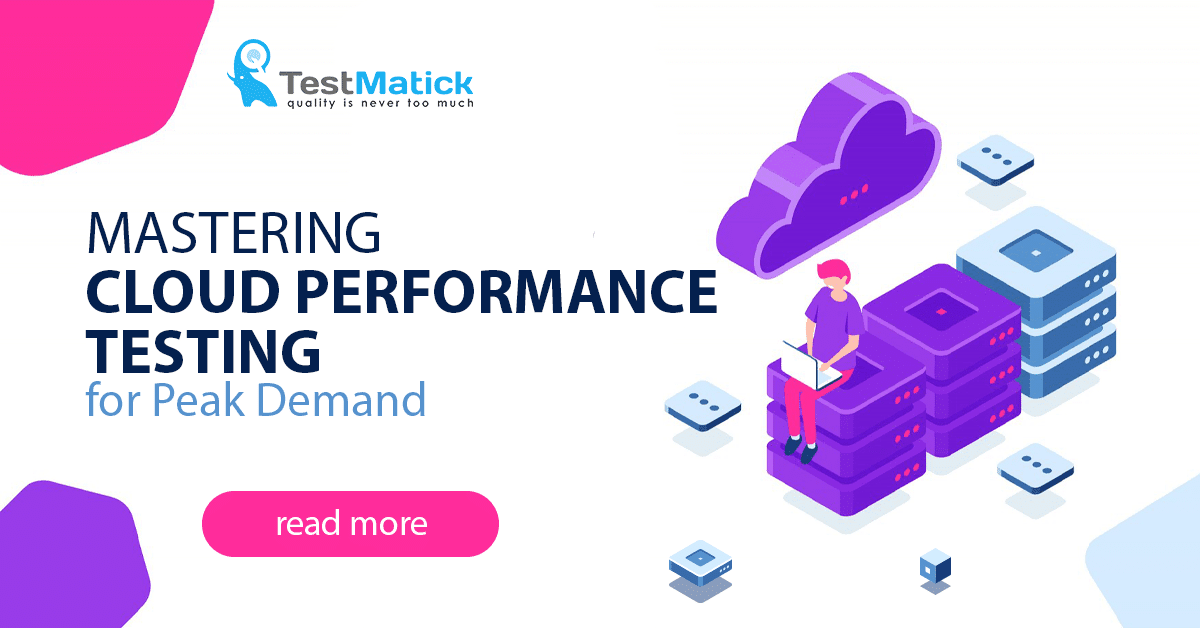
The digital realm today is characterized by its fluidity, a stark contrast to the static server rooms of the past. Cloud technology has fundamentally reshaped how we develop, deploy, and expand applications, granting unprecedented adaptability and speed. Consequently, for software testing companies, achieving mastery in performance testing within cloud environments, particularly with an emphasis on scaling to accommodate peak user loads, has transitioned from being advantageous to absolutely essential.
Cloud-native applications, designed to harness the inherent strengths of the cloud, introduce a distinctive set of challenges and opportunities for performance evaluation. Unlike their traditional, monolithic counterparts, these interconnected systems rely on a network of microservices, containers, serverless functions, and diverse managed services. Guaranteeing the seamless operation of these interdependent components when confronted with sudden surges in user traffic, and ensuring their ability to withstand failures, necessitates a sophisticated and cloud-aware testing methodology.
The Challenges of Testing Cloud-Native Applications
Performance testing in the cloud presents several distinct challenges that traditional on-premise testing methodologies often fail to address adequately:
- Dynamic and Ephemeral Infrastructure
Cloud environments are inherently dynamic. Resources can be provisioned and de-provisioned on demand, making it difficult to establish a stable and predictable testing environment. The ephemeral nature of containers and serverless functions further complicates the process of pinpointing performance bottlenecks.
- Distributed and Complex Architectures
Cloud-native applications are often composed of numerous independent services communicating over a network. Identifying performance issues within this intricate web of dependencies can be challenging. Latency, network congestion, and inter-service communication failures can significantly impact overall application performance.
- Scalability Testing Complexity
Simulating realistic peak load scenarios in the cloud requires the ability to rapidly scale the testing infrastructure itself. Provisioning and managing a large number of virtual users and injecting realistic traffic patterns can be complex and costly if not handled efficiently.
- Cost Management
Cloud resources are billed based on usage. Running extensive performance tests without proper planning and optimization can lead to unexpected and significant costs. Balancing thorough testing with cost-effectiveness is a crucial consideration.
- Monitoring and Observability
Effectively monitoring the performance of a distributed cloud application requires robust observability tools that can aggregate metrics from various components, including application logs, infrastructure metrics, and distributed tracing data. Analyzing this vast amount of data to identify the root causes of performance issues can be a significant undertaking.
- Security Considerations
Performance testing in the cloud must also consider security implications. Simulating high-load scenarios could potentially expose vulnerabilities if not conducted carefully and within secure boundaries.
Solutions for Scalable and Resilient Testing
To effectively address these challenges and ensure cloud-native applications can scale for peak demand and maintain resilience, software testing companies need to adopt a modern and cloud-centric approach to performance testing. Here are some key solutions:
- Leveraging Cloud-Based Performance Testing Tools
Utilizing performance testing tools specifically designed for the cloud is crucial. These tools offer features like elastic test infrastructure provisioning, distributed load generation, and seamless integration with cloud monitoring services. Popular options include JMeter with cloud plugins, LoadRunner Cloud, BlazeMeter, and cloud-native tools offered by cloud providers themselves (e.g., AWS Load Testing, Azure Load Testing).
- Infrastructure-as-Code (IaC) for Test Environment
Employing IaC tools like Terraform or CloudFormation to define and provision test environments ensures consistency and repeatability. This allows for the rapid creation and tear-down of scalable testing infrastructure, minimizing costs and reducing setup time.
- Realistic Load Simulation
It’s essential to simulate real-world user behavior and traffic patterns accurately. This involves understanding peak usage times, user journeys, and the types of requests the application will receive. Cloud-based tools often offer features to create sophisticated load scenarios with varying user concurrency, ramp-up periods, and geographical distribution.
- Distributed Load Generation
To effectively simulate high-load scenarios, the ability to distribute load generators across multiple cloud regions is critical. This helps to avoid bottlenecks in the testing infrastructure itself and provides a more realistic representation of geographically diverse user bases.
- Continuous Performance Testing
Integrating performance testing into the CI/CD pipeline allows for early detection of performance regressions with every code change. This “shift-left” approach helps to prevent performance issues from reaching production and reduces the cost and effort of fixing them later.
- Comprehensive Monitoring and Observability
Implementing robust monitoring and observability solutions is paramount. This includes setting up dashboards to track key performance indicators (KPIs) like response time, throughput, error rate, and resource utilization across all components of the application. Distributed tracing tools can help to pinpoint performance bottlenecks within complex microservice architectures.
- Chaos Engineering for Resilience Testing
To ensure the application’s resilience under stress, incorporating chaos engineering practices is essential. This involves intentionally injecting failures (e.g., network latency, service outages) into the production-like test environment to identify weaknesses and validate the application’s ability to recover gracefully.
- Cost Optimization Strategies
Implementing strategies to optimize testing costs is crucial. This includes right-sizing test infrastructure, utilizing spot instances where appropriate, automating test environment teardown, and carefully planning test durations.
- Collaboration and Communication
Effective collaboration between development, operations, and testing teams is essential for successful performance testing in the cloud. Sharing performance test results, insights, and potential bottlenecks early and often facilitates faster resolution and improved application quality.
Conclusion
Performance testing in the cloud, particularly for scaling to meet peak demand, is a critical aspect of ensuring the success of modern cloud-native applications. By understanding the unique challenges posed by dynamic infrastructure, distributed architectures, and the need for scalability, software testing companies can leverage cloud-based tools, automation, and robust monitoring strategies to deliver effective and efficient performance testing services.
Embracing continuous performance testing, chaos engineering, and cost optimization techniques will further empower businesses to build resilient, high-performing applications that can seamlessly handle the demands of today’s digital world.
As cloud adoption continues to accelerate, mastering performance testing in this environment will be a key differentiator for software testing companies, enabling them to provide invaluable expertise and ensure the reliability and scalability of their clients’ critical applications.




0 Comments