








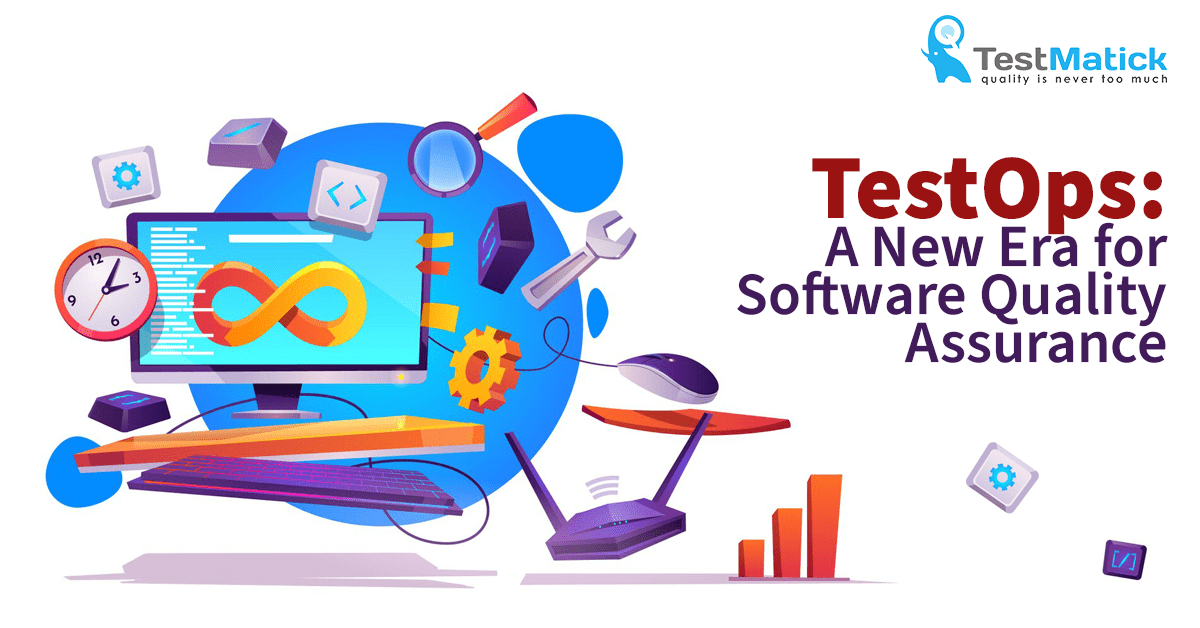
Today, success hinges on speed, quality, and collaboration. Just as DevOps bridged the gap between development and operations, TestOps is redefining QA by applying DevOps principles to the testing lifecycle. It empowers QA teams to deliver faster, collaborate more effectively, and operate with greater efficiency.
This article explores the core of TestOps – its practices, benefits, and how it streamlines QA operations.
Decoding TestOps
At its heart, TestOps is a shift in how testing is approached – integrating it deeply into every stage of the Software Development Lifecycle (SDLC). Inspired by DevOps, it transforms QA into a process that is:
- Continuous – Testing happens throughout the development
- Collaborative – QA works closely with dev, ops, and business teams
- Automated – Tools accelerate and simplify test execution
- Scalable – Adapts to growing testing needs
Instead of being a separate phase, testing becomes an embedded, collaborative effort – aligning QA with agility and release goals from start to finish.
The Imperative of TestOps
Traditional QA methodologies often struggle to keep pace with the rapid iterations of modern Continuous Integration/Continuous Delivery (CI/CD) pipelines. Testing bottlenecks can introduce significant delays in releases, while fractured communication between QA and other teams can lead to overlooked defects or ambiguous requirements. TestOps directly confronts these challenges by:
- Automating test execution and intelligent reporting;
- Seamlessly integrating QA into the CI/CD pipeline;
- Establishing real-time feedback loops;
- Cultivating a culture of shared quality ownership.
The tangible outcomes? Accelerated release cycles, fortified team collaboration, and demonstrably higher software quality – all while simultaneously trimming operational overhead.
Core TestOps Practices That Drive Operational Efficiency
Let’s break down the essential practices behind TestOps and how they help QA teams work smarter and faster.
1. Continuous Testing: Quality at Every Stage
TestOps pushes testing into every part of the development pipeline—from unit tests during coding to regression and performance tests after deployment.
- How it works: Tests run automatically when code changes, builds, or deploys happen.
- Key tools: Jenkins, GitHub Actions, GitLab CI, CircleCI.
- Why it matters: Early bug detection, faster feedback, and stronger coverage.
By testing earlier (“shift left”) and continuously (“shift right”), teams can catch issues early and fix them before they grow into bigger problems.
2. Scalable Test Automation: Speeding Things Up
Manual testing still has its place, but automation is essential for keeping up with fast development cycles. TestOps supports automation across:
- Functional, regression, performance, security, and integration testing
- Tools like: Selenium, Cypress, Playwright, JUnit
- Advanced strategies:
- Auto-test data generation
- Smart test selection based on code changes
- Running tests in parallel using cloud/container environments
This boosts test coverage while keeping release cycles fast and efficient.
3. Infrastructure as Code (IaC): Consistent, On-Demand Environments
Waiting for test environments to be set up can slow everything down. TestOps uses IaC tools like Terraform, Docker, and Kubernetes to spin up test environments automatically.
- On-demand provisioning
- Consistent configurations
- Automated setup and teardown
This eliminates environment-related issues and keeps the QA process smooth and predictable.
4. Test Observability: Making Results Clear and Actionable
Visibility is key in TestOps. Dashboards and analytics help teams understand test outcomes and spot issues early.
- Real-time reports and alerts
- Trends to track flaky tests or bottlenecks
- Integration with tools like Slack, Jira, and MS Teams
Better insights lead to faster debugging, more efficient test maintenance, and continuous improvements in QA.
5. Collaboration and Shared Ownership: Quality is Everyone’s Job
TestOps promotes a culture where QA isn’t just the responsibility of testers—it’s shared across the entire team.
- Developers write unit/integration tests.
- QA engineers lead test strategy and automation.
- DevOps manages test execution and monitoring.
- Product managers define testable requirements.
This alignment reduces miscommunication, avoids delays, and helps deliver high-quality software, faster.
Implementing TestOps: A Practical Roadmap
Transitioning to a TestOps model is a journey that involves both cultural and technical evolution. Here’s a practical roadmap to guide teams embarking on their TestOps transformation:
- Conduct a Thorough Assessment of Your Current QA Workflow: Identify existing inefficiencies such as slow feedback loops, manual dependencies, and lack of visibility. Quantify key metrics like the time taken from code commit to test report generation.
- Strategically Integrate Testing with Your CI/CD Pipeline: Begin by setting up automated triggers for essential test suites (like smoke and unit tests) within your existing pipelines. Gradually expand test coverage as your confidence and infrastructure grow.
- Prioritize Automation Efforts: Avoid the pitfall of attempting to automate everything at once. Focus on automating high-value test cases that cover critical functionalities and high-risk areas. Ensure that test data and environments are designed for reusability.
- Cultivate a DevTest Culture: Actively encourage developers to embrace ownership of basic testing activities. This empowers QA professionals to concentrate on higher-level tasks such as test strategy formulation, automation framework maintenance, exploratory testing to uncover hidden issues, and overall process optimization.
- Invest Wisely in Tooling and Observability: Implement robust dashboards, comprehensive test result analytics platforms, and proactive alerting systems. Leverage tagging and categorization strategies to effectively prioritize and manage identified issues.
Real-World Impact: Tangible Benefits of TestOps in QA
Organizations that have embraced TestOps principles are reporting significant and tangible benefits, including:
- Accelerated Time-to-Market: Automated pipelines and parallel test execution drastically reduce release cycles, often transforming timelines from weeks to mere days or even hours.
- Enhanced Test Coverage: With optimized infrastructure and continuous test execution, test coverage expands significantly without a corresponding increase in manual effort.
- Improved Team Collaboration: Cross-functional teams operate with greater efficiency due to clearly defined responsibilities and shared quality objectives.
- Superior Defect Detection: Early and continuous testing, coupled with rapid feedback loops, enables the identification and resolution of bugs long before they impact production environments.
In highly regulated industries such as FinTech, dynamic EdTech environments, and the fast-paced world of iGaming, where unwavering quality and strict compliance are non-negotiable, TestOps provides the agility and control necessary to maintain a competitive edge.
Final Thoughts: Embracing the Future of QA
TestOps transcends the realm of a mere buzzword; it represents a pragmatic and forward-thinking evolution of QA practices that aligns seamlessly with the demands of modern software development. By strategically embracing automation, continuous testing methodologies, collaborative workflows, and comprehensive observability, software teams can unlock unprecedented levels of operational efficiency and consistently deliver superior software at an accelerated pace.
As a dedicated software testing company, we empower our clients to implement these transformative TestOps principles by tailoring robust automation strategies, seamlessly integrating testing into their CI/CD pipelines, and meticulously optimizing their QA operations to achieve their unique business objectives.




0 Comments