







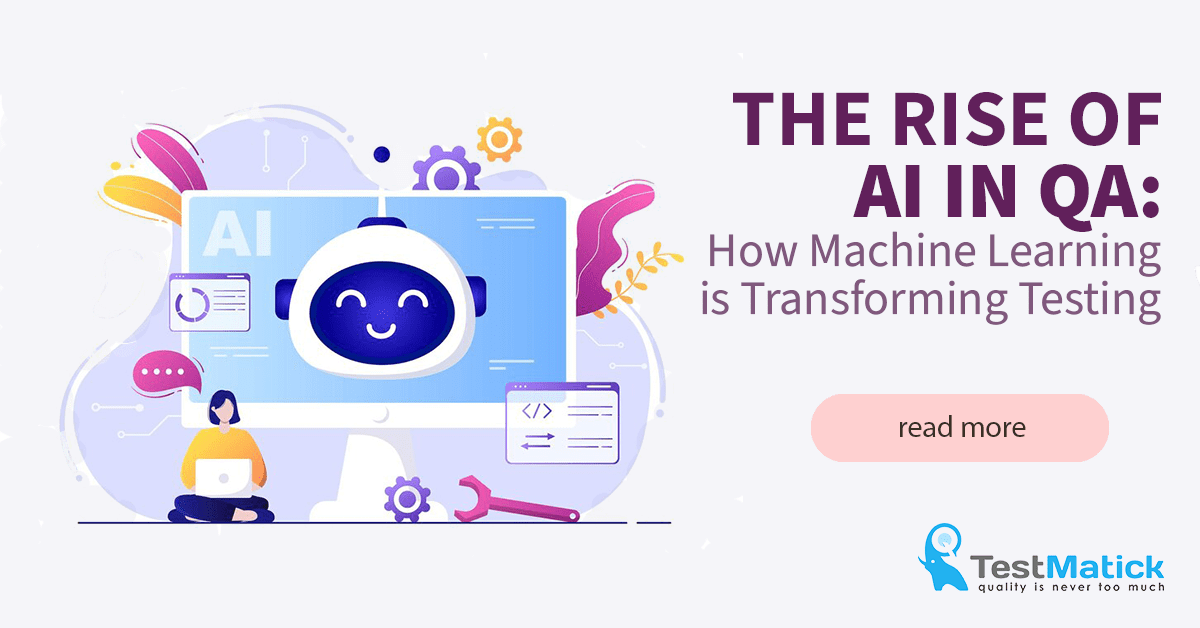
In the world of software testing, the role of artificial intelligence (AI) and machine learning (ML) has grown tremendously. These technologies are not just buzzwords; they’re changing the way QA teams approach testing. From optimizing test automation to identifying defect patterns and enhancing predictive analysis, AI is paving the way for a more efficient, intelligent, and proactive approach to quality assurance.
In this article, we’ll explore how AI is transforming software testing services, its practical applications, and what it means for the future of QA.
AI in Test Automation: A New Era of Efficiency
One of the most immediate and noticeable impacts of AI in QA is in the realm of test automation. Traditionally, automated tests were created through scripted instructions, requiring significant time and effort from developers and testers. As software evolves, maintaining these test scripts becomes an ongoing challenge, especially when new features or changes are introduced.
Enter AI-powered test automation tools. These tools are capable of learning from past testing data and adjusting themselves to accommodate changes in the application automatically. Machine learning models can dynamically generate new test cases, reducing the manual effort required to update scripts whenever there’s a code change.
AI also optimizes the execution of tests. Instead of running every test case in a suite, AI can prioritize tests based on factors like the risk of failure, code changes, or past defect data. This means that the most critical parts of the application are tested first, speeding up the process without sacrificing quality. AI tools can also handle repetitive tasks, freeing up testers to focus on more complex, high-value work.
Detecting Patterns in Defects: A Smarter Approach
For years, defect management has been one of the most labor-intensive tasks for QA teams. Analyzing defect logs, categorizing issues, and trying to detect recurring patterns in problems often required painstaking manual effort. AI, however, is making this process much more efficient.
Machine learning algorithms are designed to process large datasets quickly and accurately, which is ideal for analyzing defect logs. AI tools can automatically detect patterns in defects—whether certain issues appear after specific code changes, are more likely to occur in certain modules, or follow a predictable pattern over time.
For example, AI might identify that a certain type of defect appears more frequently when specific functions or features are used, or that a particular developer’s code is associated with a recurring issue. This level of insight allows QA teams in software testing companies to address root causes more effectively and allocate testing resources where they are most needed.
By analyzing historical data, AI tools can also predict which areas of an application are most likely to fail in future releases. This predictive capability helps QA teams take a proactive approach to quality assurance, allowing them to anticipate problems before they arise and fix them promptly.
Predictive Analysis: The Power of Data-Driven Decisions
Predictive analysis is one of the most exciting aspects of AI in QA. With AI, it’s no longer just about identifying defects that have already occurred; it’s about predicting where issues are likely to arise in the future.
Machine learning models can analyze historical data, including test results, defect reports, and even developer behavior, to forecast potential risks and failures. For instance, AI tools might predict that certain features in the application are more likely to break under specific conditions or when interacting with particular hardware configurations. This gives QA teams a clearer picture of where to focus their testing efforts.
What’s more, predictive analysis can also help optimize test coverage. Rather than running every test in a suite, AI tools can identify which tests are most likely to detect issues based on the current state of the application. This targeted testing approach ensures that resources are being used efficiently, and it reduces the time and cost of testing without compromising quality.
The Future of AI in QA: What Lies Ahead
Looking to the future, AI in QA holds immense potential. As machine learning models become more sophisticated, they will be able to handle even more complex datasets, providing deeper insights and more accurate predictions. We’re already seeing AI tools integrated into the software development lifecycle, and as these technologies evolve, they will likely become even more essential.
One of the most promising developments is the rise of “self-healing” tests. These are tests that can automatically adapt to changes in the application without human intervention. For example, if a UI element changes, a self-healing test can adjust itself to continue validating the new version. This could significantly reduce the burden on QA teams and streamline the entire testing process.
Moreover, AI-powered tools will likely play a larger role in continuous testing and DevOps pipelines. By integrating AI into these processes, teams can ensure that testing is happening in real-time, continuously identifying issues as code is being developed, rather than waiting until later in the process. This will enable a faster feedback loop and help developers catch defects earlier, reducing the cost of fixing issues down the line.
Embracing AI for Better Quality
As AI continues to reshape the software testing landscape, the key takeaway for QA professionals is that adopting AI tools is no longer optional—it’s becoming a necessity. AI is enabling smarter, faster, and more accurate testing processes that help teams deliver higher-quality software at a faster pace.
For companies that want to stay competitive in the fast-moving world of software development, embracing AI-powered testing tools will be crucial. While AI can’t replace human expertise, it can certainly augment and enhance the work that testers do, allowing them to focus on higher-level tasks, make more data-driven decisions, and improve the overall quality of the software. The future of QA is undoubtedly intertwined with artificial intelligence. By leveraging AI and machine learning, software testing companies can not only improve their processes but also drive innovation in the industry, ultimately delivering better products to users faster and more reliably than ever before.



0 Comments